
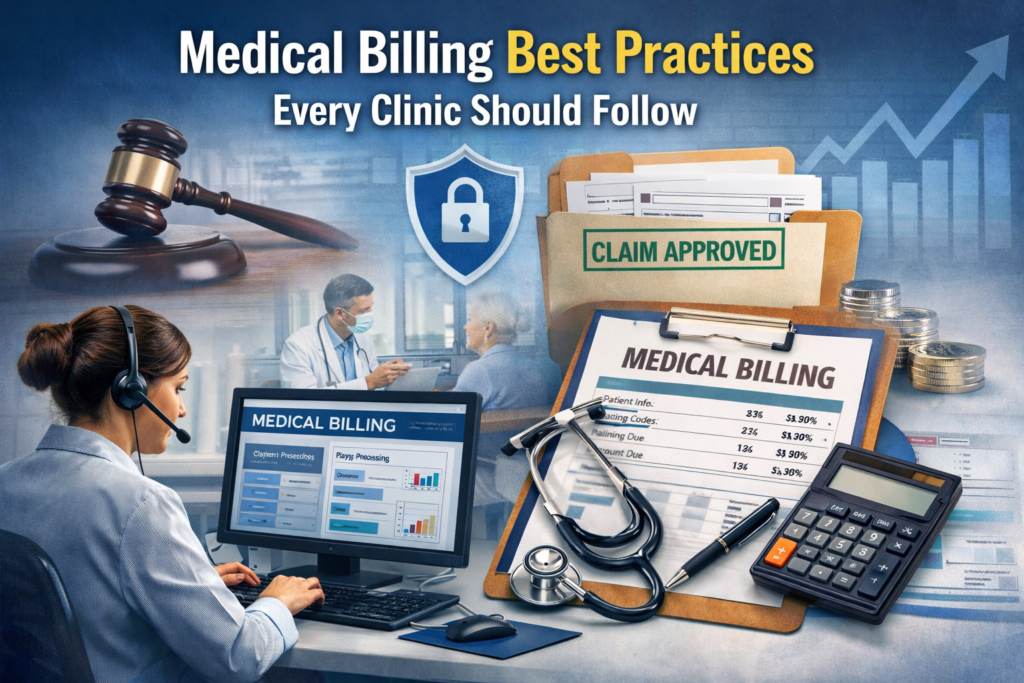
Medical Billing Best Practices Every Clinic Should Follow are essential for ensuring financial stability, compliance, and operational efficiency in today’s healthcare environment. In the United States, where healthcare regulations and insurance processes are complex, accurate medical billing plays a critical role in maintaining revenue cycles. Clinics that implement effective billing strategies can reduce errors, minimize claim denials, and improve overall cash flow. Understanding Medical Billing Best Practices Every Clinic Should Follow is crucial for healthcare providers, administrators, and billing professionals aiming to streamline operations and enhance patient satisfaction.
One of the most important aspects of Medical Billing Best Practices Every Clinic Should Follow is accurate patient information collection. Errors in patient data, such as incorrect insurance details or misspelled names, can lead to claim rejections and delays in payment. Clinics should ensure that all patient information is verified at the time of registration. Implementing digital systems for data entry and verification can significantly reduce errors and improve efficiency.
Another critical factor in Medical Billing Best Practices Every Clinic Should Follow is proper coding and documentation. Medical coding must accurately reflect the services provided to patients. Incorrect coding can result in claim denials or legal issues. Clinics should invest in trained coding professionals and regularly update their knowledge of coding standards such as ICD and CPT codes. Detailed documentation supports accurate coding and ensures compliance with healthcare regulations.
Timely claim submission is also a key component of Medical Billing Best Practices Every Clinic Should Follow. Delayed claims can lead to cash flow issues and missed revenue opportunities. Clinics should establish efficient workflows to ensure that claims are submitted promptly after services are rendered. Automated billing systems can help streamline this process and reduce delays.
Regular monitoring and follow-up are essential in Medical Billing Best Practices Every Clinic Should Follow. Claims should be tracked to ensure they are processed correctly and payments are received on time. If a claim is denied, it is important to identify the reason and take corrective action immediately. Effective follow-up processes help reduce revenue loss and improve financial performance.
How AI Improves Diagnosis Accuracy in Healthcare
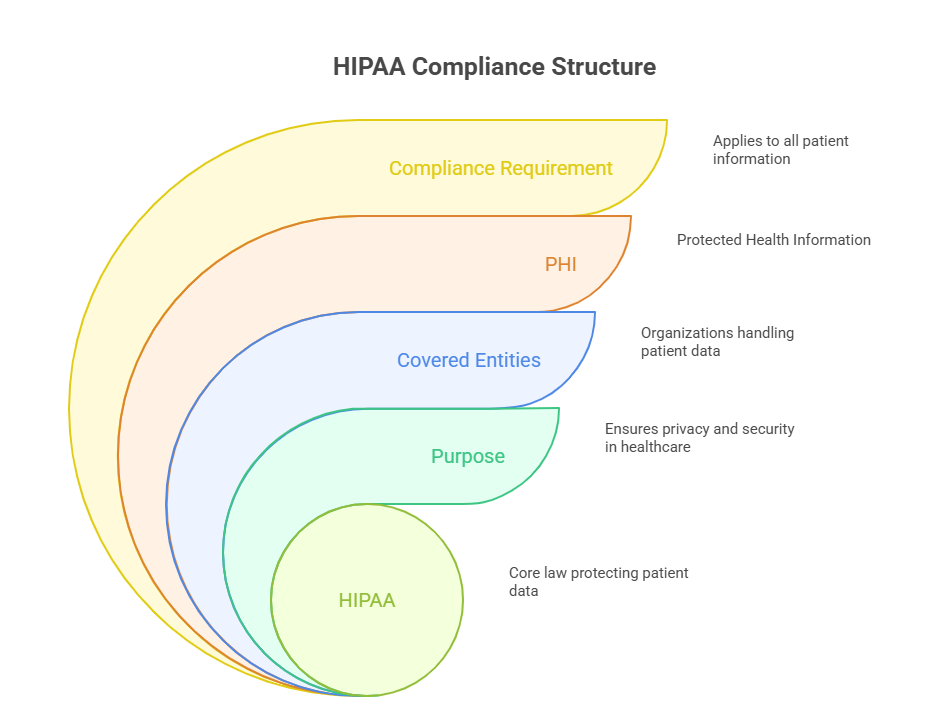
Another important aspect of Medical Billing Best Practices Every Clinic Should Follow is maintaining compliance with healthcare regulations. Clinics must adhere to guidelines such as HIPAA to protect patient information and avoid legal issues. Compliance ensures that billing practices are ethical and transparent. Regular audits can help identify potential compliance issues and ensure that clinics meet regulatory requirements.
Technology plays a significant role in Medical Billing Best Practices Every Clinic Should Follow. Modern billing software and electronic health record (EHR) systems integrate billing processes with patient data, improving accuracy and efficiency. These systems reduce manual errors and provide real-time insights into billing performance. Clinics that adopt advanced technology can streamline operations and enhance revenue management.
Staff training is another key element of Medical Billing Best Practices Every Clinic Should Follow. Billing staff should be well-trained in coding, billing procedures, and compliance requirements. Continuous training ensures that staff stay updated with industry changes and maintain high standards of accuracy. Investing in staff development leads to better performance and reduced errors.

Transparent communication with patients is also an important part of Medical Billing Best Practices Every Clinic Should Follow. Patients should be informed about billing procedures, insurance coverage, and payment options. Clear communication helps prevent misunderstandings and improves patient satisfaction. Providing detailed billing statements and offering support for billing inquiries can enhance the patient experience.
Another effective strategy in Medical Billing Best Practices Every Clinic Should Follow is optimizing the revenue cycle. This involves managing all aspects of billing, from patient registration to final payment. Efficient revenue cycle management ensures that clinics receive timely payments and maintain financial stability. Analyzing key performance indicators can help identify areas for improvement.
Top Healthcare Technologies Trending in 2026
Outsourcing medical billing is another option that clinics can consider as part of Medical Billing Best Practices Every Clinic Should Follow. Professional billing services have expertise in handling complex billing processes and can improve efficiency. Outsourcing allows clinics to focus on patient care while ensuring accurate and timely billing.
In conclusion, Medical Billing Best Practices Every Clinic Should Follow are essential for improving efficiency, reducing errors, and ensuring financial success in the healthcare industry. By implementing accurate data collection, proper coding, timely claim submission, and effective follow-up, clinics can optimize their billing processes. Technology, staff training, and compliance further enhance billing performance. Adopting these best practices will help clinics in the USA achieve better financial outcomes and deliver high-quality patient care.
FAQ
1. What are Medical Billing Best Practices Every Clinic Should Follow?
They include accurate data entry, proper coding, timely claims submission, and compliance with regulations.
2. Why is medical billing important for clinics?
It ensures proper reimbursement, improves cash flow, and reduces claim denials.
3. How can clinics reduce billing errors?
By using advanced software, training staff, and verifying patient information.
4. What is revenue cycle management?
It is the process of managing billing from patient registration to final payment.
5. Should clinics outsource medical billing?
Outsourcing can improve efficiency and accuracy, especially for small clinics.
According to the World Health Organization, artificial intelligence is playing a key role in improving healthcare systems worldwide.
Research from National Institutes of Health shows that AI can significantly improve diagnosis accuracy in healthcare.The future includes advanced AI, personalized medicine, and smart hospitals.
Health Content Disclaimer
All health-related information on this website is published in good faith and for general informational purposes only. This content does not replace professional medical advice, diagnosis, or treatment.
We do not assume responsibility for any actions taken based on the information provided. Readers are strongly encouraged to consult licensed medical professionals for personalized healthcare guidance.