
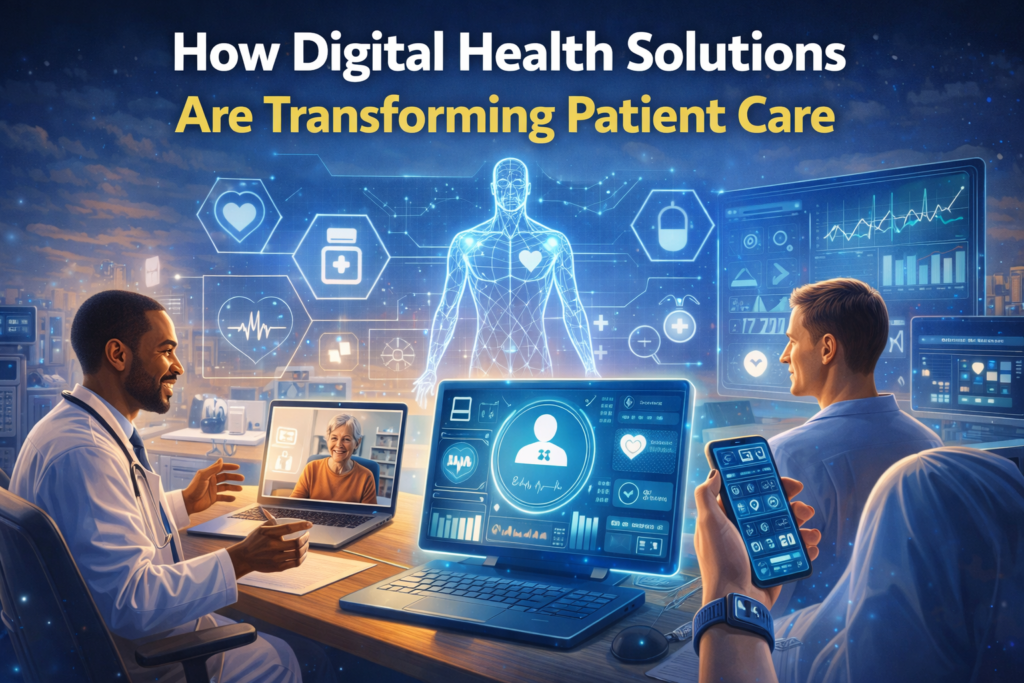
How Digital Health Solutions Are Transforming Patient Care is redefining the healthcare landscape across the United States. With rapid advancements in technology, healthcare providers are now able to deliver more efficient, accessible, and personalized care than ever before. From telemedicine platforms to AI-powered diagnostics, digital innovation is bridging gaps between patients and providers. Understanding How Digital Health Solutions Are Transforming Patient Care is essential for healthcare organizations, professionals, and patients navigating today’s modern medical environment.
The demand for convenient and accessible healthcare has accelerated the adoption of digital solutions. How Digital Health Solutions Are Transforming Patient Care can be seen in the widespread use of telehealth services, which allow patients to consult with doctors remotely. This is especially beneficial for individuals in rural or underserved areas where access to healthcare facilities may be limited. By eliminating the need for physical visits, telemedicine saves time, reduces costs, and ensures timely medical attention.
Another major way How Digital Health Solutions Are Transforming Patient Care is through electronic health records (EHR). Digital records allow healthcare providers to access patient information instantly, improving coordination and reducing errors. Instead of relying on paper-based systems, doctors can review medical histories, lab results, and treatment plans in real time. This enhances decision-making and ensures that patients receive consistent and accurate care across different providers.
Artificial intelligence is also playing a crucial role in How Digital Health Solutions Are Transforming Patient Care. AI-powered tools can analyze large amounts of medical data to identify patterns and support diagnosis. For example, AI algorithms can detect early signs of diseases such as cancer or heart conditions, enabling early intervention. This not only improves patient outcomes but also reduces the burden on healthcare systems.
Wearable technology is another innovation contributing to How Digital Health Solutions Are Transforming Patient Care. Devices such as fitness trackers and smartwatches can monitor vital signs, including heart rate, activity levels, and sleep patterns. These devices provide real-time data that can be shared with healthcare providers, allowing for continuous monitoring and proactive care. Patients are empowered to take control of their health, leading to better long-term outcomes.
Mobile health applications are further enhancing How Digital Health Solutions Are Transforming Patient Care. These apps provide features such as medication reminders, appointment scheduling, and health tracking. Patients can easily manage their healthcare from their smartphones, improving adherence to treatment plans. For healthcare providers, these apps offer valuable insights into patient behavior and health trends.
How AI Improves Diagnosis Accuracy in Healthcare
Data analytics is another powerful tool in How Digital Health Solutions Are Transforming Patient Care. By analyzing large datasets, healthcare organizations can identify trends, predict outcomes, and improve operational efficiency. Predictive analytics helps in identifying high-risk patients and implementing preventive measures. This proactive approach reduces hospital admissions and improves overall healthcare quality.
Digital health solutions are also improving patient engagement, which is a key aspect of How Digital Health Solutions Are Transforming Patient Care. Interactive platforms allow patients to access their health information, communicate with providers, and participate in their treatment plans. This level of engagement leads to better health outcomes and increased patient satisfaction.
Security and privacy are critical considerations in How Digital Health Solutions Are Transforming Patient Care. With the increasing use of digital platforms, protecting patient data is essential. Advanced encryption technologies and secure systems ensure that sensitive information remains confidential. Healthcare organizations must comply with regulations such as HIPAA to maintain trust and safeguard patient data.
Another important benefit of How Digital Health Solutions Are Transforming Patient Care is cost reduction. Digital tools streamline administrative processes, reduce paperwork, and minimize the need for in-person visits. This leads to significant cost savings for both healthcare providers and patients. In the USA, where healthcare costs are a major concern, digital solutions offer a more affordable alternative.
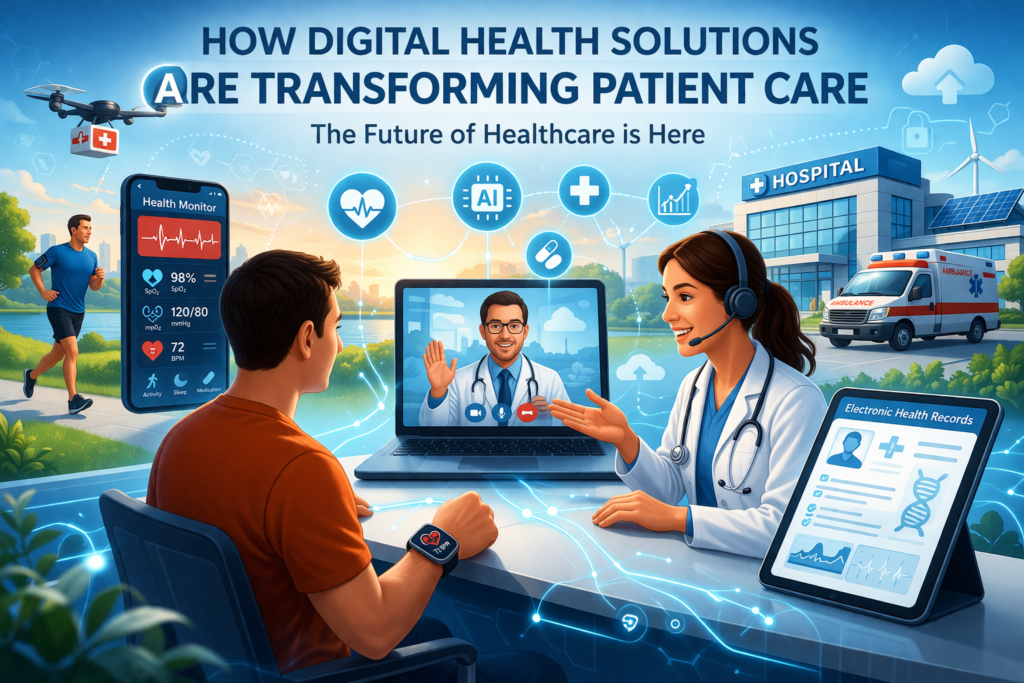
The future of How Digital Health Solutions Are Transforming Patient Care looks promising as technology continues to evolve. Innovations such as blockchain for secure data sharing, virtual reality for medical training, and advanced robotics for surgeries are expected to further enhance healthcare delivery. These advancements will make healthcare more precise, efficient, and accessible.
medical-billing-best-practices-every-clinic-should-follow/
In conclusion, How Digital Health Solutions Are Transforming Patient Care is revolutionizing the healthcare industry in the United States. By leveraging technology, healthcare providers can deliver better care, improve efficiency, and enhance patient experiences. As digital health continues to evolve, it will play an increasingly important role in shaping the future of healthcare.
FAQ
1. How Digital Health Solutions Are Transforming Patient Care?
They improve accessibility, efficiency, and outcomes through technologies like telemedicine, AI, and data analytics.
2. What are digital health solutions?
They include telemedicine, mobile health apps, wearable devices, and electronic health records.
3. How does AI help in healthcare?
AI analyzes medical data to support diagnosis, predict diseases, and improve treatment plans.
4. Are digital health solutions safe?
Yes, with proper security measures like encryption and compliance with healthcare regulations.
5. What is the future of digital healthcare?
The future includes advanced AI, remote monitoring, and more personalized healthcare services.
According to the World Health Organization, artificial intelligence is playing a key role in improving healthcare systems worldwide.
Research from National Institutes of Health shows that AI can significantly improve diagnosis accuracy in healthcare.
Health Content Disclaimer
All health-related information on this website is published in good faith and for general informational purposes only. This content does not replace professional medical advice, diagnosis, or treatment.
We do not assume responsibility for any actions taken based on the information provided. Readers are strongly encouraged to consult licensed medical professionals for personalized healthcare guidance.